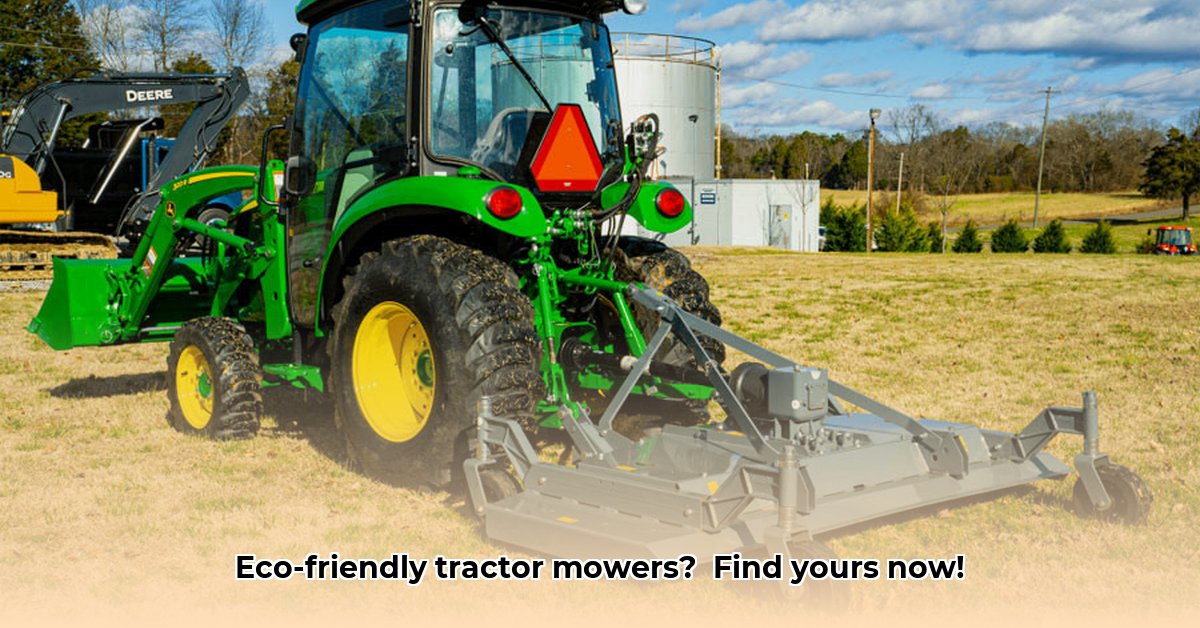
Tractor Finishing Mower: Your Eco-Friendly Guide to the Perfect Cut
Choosing the right tractor finishing mower is a significant decision impacting farm efficiency, environmental impact, and profitability. This guide helps you select the perfect mower for your operation. For more information on tractor implements, check out this helpful resource: disc mower options.
Understanding Your Farming Needs
Before considering brands, assess your farm's specifics. What type of land do you manage (orchards, vineyards, pastures)? How many acres require mowing? Consider soil type; is it prone to compaction? This analysis helps narrow down mower options. For example, a small hobby farm requires different capabilities than a large commercial operation. What are the dimensions of your typical field and are there any obstacles to navigate?
Key Features to Consider
Several features significantly influence mower selection:
Cutting Width: Wider decks cover more ground faster but demand a more powerful tractor. Smaller decks are ideal for tighter spaces and maneuverability. Consider your field's layout and the presence of obstacles.
Discharge Method: Rear discharge spreads clippings evenly, acting as a natural fertilizer (eco-friendly!). Side discharge is useful for clipping collection or in areas where dispersed clippings are undesirable.
Deck Construction: Steel decks offer superior durability, while aluminum decks are lighter and potentially easier to maintain, though less robust. The choice depends on your typical operating conditions and the toughness of the terrain.
PTO Horsepower Matching: Crucial! The mower's required PTO horsepower (power take-off) must precisely match your tractor's capacity. Mismatched power leads to poor cutting quality and potential tractor damage. Consult your tractor's manual for the correct PTO horsepower. This is a non-negotiable for both efficiency and longevity.
Top Brands: Land Pride vs. Bush Hog
Land Pride and Bush Hog are leading brands, each with strengths:
| Feature | Land Pride | Bush Hog |
|---|---|---|
| Typical Use | Smaller to medium-sized farms | Larger farms and demanding terrains |
| Build Quality | Sturdy and reliable | Heavy-duty, suited for tough conditions |
| Price Point | Generally more budget-friendly | Typically more expensive |
| Maintenance | Requires minimal maintenance | Requires minimal maintenance |
Matching Your Mower and Tractor: A Critical Step
Successfully matching your tractor and mower is essential. Underpowering a mower results in poor cuts and equipment damage; a mower that’s overpowered is inefficient. Always consult your tractor's owner's manual to determine its PTO horsepower capacity. Select a mower with PTO horsepower requirements that fall comfortably within this range.
Sustainable Mowing Practices
Sustainable mowing goes beyond mower selection:
Reduce Passes: Fewer passes minimize soil compaction, improving soil health. Plan mowing routes efficiently.
Regular Maintenance: Regular maintenance extends lifespan, minimizing waste and saving money. A well-maintained mower delivers cleaner, more efficient cuts.
Nutrient Cycling: Rear discharge mowers return nutrients to the soil, reducing chemical fertilizer needs. This process enhances soil fertility naturally.
Responsible Disposal: Dispose of old mowers responsibly, utilizing local recycling or proper disposal options. Research your options for environmentally friendly disposal processes, and consider the environmental impact of replacement parts.
Choosing the Right Finish Mower: A Step-by-Step Guide
This section guides you through the process of selecting a finish mower.
Step 1: Assess Your Needs: Determine the mowing area's size, terrain type, and intended usage (fields, road travel). These factors heavily influence mower choice.
Step 2: Conduct Research: Explore Land Pride and Bush Hog models that meet your needs. Read online reviews focusing on reliability, maintenance, and parts availability. Consulting fellow farmers in your area can provide valuable insights.
Step 3: Evaluate Dealer Network and Parts Access: Reliable local dealer support minimizes downtime and repair costs. Contact dealers, inquiring about service, parts availability, and pricing for each brand's models. Find a dealer with an excellent reputation and a robust parts inventory.
Step 4: Compare Total Cost of Ownership (TCO): TCO involves:
- Initial Purchase Price: Obtain quotes from multiple dealers.
- Maintenance Costs: Consider the estimated maintenance frequency for each model.
- Parts Costs: Compare the cost of typical replacement components.
- Lifespan: Research the expected lifespan of each model.
Step 5: Make Your Decision: Consider the tradeoffs between initial cost, long-term expenses, and operational efficiency. The best choice represents the optimal balance of these factors.
Tire Type: Impacting Long-Term Costs
Tire type (airplane or laminated) significantly influences TCO. While airplane tires might be cheaper initially, the higher risk of flats and resultant repair costs often outweigh this initial saving. Laminated tires generally prove more cost-effective over time.
Key Takeaways:
- Reputable brands like Bush Hog and Land Pride provide quality mowers, but the ideal choice depends on your specific requirements.
- Cutting performance is comparable between brands, but factors like parts availability and dealer support significantly impact long-term satisfaction.
- Comparing Land Pride and Bush Hog finish mowers’ total cost of ownership (TCO) necessitates careful consideration of initial purchase price, maintenance, parts costs, and machine lifespan.
- Tire type significantly affects cost; laminated tires generally offer superior long-term cost-effectiveness by reducing downtime from flats.
- Tailor your mower selection to your mowing needs. Finish mowers are suited for smaller areas and precise cuts, while batwing mowers are more efficient for larger fields, but present unique challenges and costs.